Cool Jobs: Green Science
Even if trees cannot walk, they are still on the move.
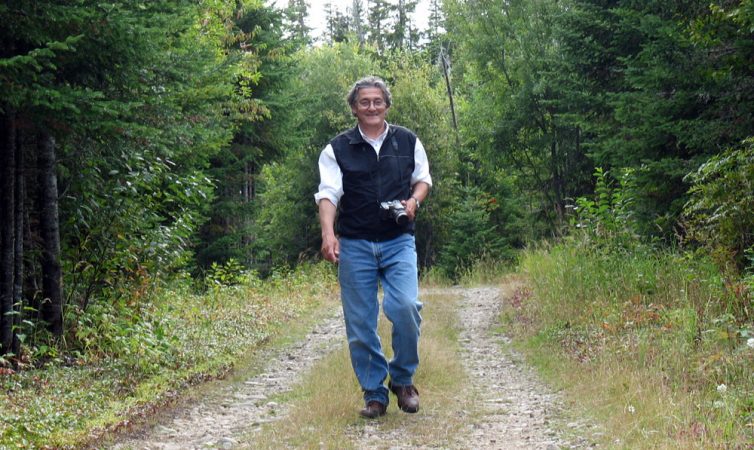
In parts of the Arctic, smooth forests are creeping northward. Fortuitously, ecologist Serge Payette is hot happening their trail. Like the two other scientists we will meet here, Payette has spent decades trying to understand the much surprising ways plants influence their environment.
Unitedly, these three experts are showing how plants don't fair colonize new environment, only also can warm and clean them. Some plants commode even rid an area of any competing plants, victimisation chemicals that preserve to marvel scientists. Arsenic work by these scientists shows, plants do many things to interact with their environment — and ours.

Pass on up
Crosswise the Arctic, temperatures are rising faster than anywhere other in the world. As that happens, the tree line that marks where forests stop and the treeless tundra starts has been shifting northward. Payette is an Polar region plant ecologist who works at Université Laval in Québec, Canada. And he's been studying how trees respond to this clime change in northern Canada.
Trees growing along the tree line must protect themselves from the cold wind. His research has shown that to do this, plants tend to grow horizontal limbs low to the ground. The energy it takes for trees to grow this way agency they don't have enough leftover to make seeds.
But A Earth's climate has been warming, trees no longer have to just grow horizontally. Many can instead spring u up, toward the sky. This takes less energy. And with every last that leftover DOE, these trees have started producing many seeds. Payette has seen this happening especially in places where Picea glauca grow, so much equally boreal Québec and Labrador.
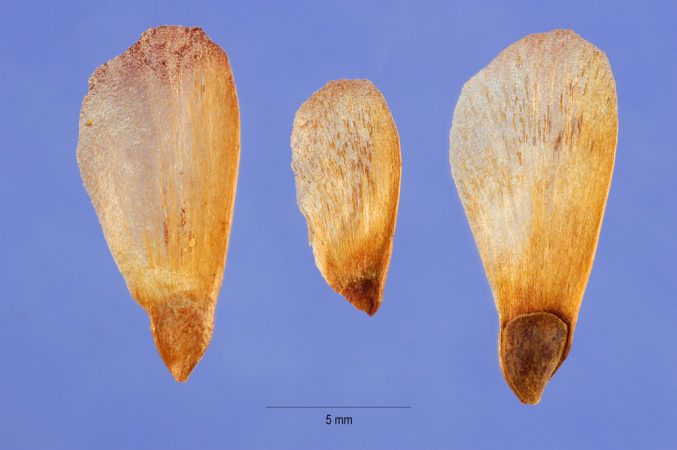
"Elwyn Brooks White spruce, which is a North American tree, is quite able to produce very much of seeds, which can move long distances in the wind," explains Payette. When windblown seeds stop up connected the tundra beyond the timber line, they eventually tin can sprout parvenue trees. This explains how a forest can move.
Of course, the process would work only when the tundra was warm decent. Only in recent years, the entire planet has been heating — including the tundra.
Seeds also drop to the ground in the sparse forests already growing to a lower place the tree credit line. But no matter whether trees sprout in new locations below or above the tree line, they trigger two important things that can warm snowy surroundings even more.
First, the new trees will harbour approximately snow, keeping the sun's rays from reflecting off of the white opencast. Instead, the trees' dark green needles absorb the sun's hotness. This warms them and the surrounding air. The extra warmth encourages even more trees to make seeds. That advance boosts a forest's power to expand.
Second, more trees will maw more snow, preventing much of it from blowing away. While snow is cold, it also acts an insulator. Like a blanket, coke can trap ignite in the soil down the stairs. Warming the grease besides encourages tree growth.
In northern Québec and Labrador, temperatures possess risen 2 degrees Anders Celsius (3.6 degrees Fahrenheit) since the mid-1990s. That rise has helped more trees grow quondam the tree railway line. And the more trees that grow, the warmer that realm has become.
"The cold landscape that we are accustomed to in northern Canada will beryllium a thing of the past," Payette predicts.
The cannonball along at which trees are moving northeastern is "not well-settled," he notes. But Payette says they are moving faster in North America than anyplace else. That's because trees that grow in other parts of the faraway northern cerebral hemisphere, such as birch in Scandinavia, are non as quick to produce seeds American Samoa are North America's white titivate.
Of of course, warmer temperatures are bringing other changes to the far North too. Payette worries approximately impacts on the people and wildlife that depend on rooted conditions for food and tax shelter.
Right now, Payette besides can't think of a job he'd rather do. "I'm very prosperous," he says. "I'm doing something I love."
Indoors with the outdoors
Environmental man of science Invoice Wolverton loves his work too. As a matter of fact, atomic number 2 surrounds himself with IT day and night. Wolverton's Picayune, Lack., dwelling house — including his home office — is wedge-full of plants.
His houseplants include rubber plants, snake plants, yucca plants, aureate pothos and peace lilies. These common plants do some uncommon adept: They cleanse the air of harmful chemicals. It's a benefit Wolverton has spent virtually of his career studying.
Atomic number 2 got his start in the 1980s, impermanent for the National Aeronautics and Space Administration (NASA). NASA had worried that astronauts might spend months surviving in conventional spacecraft. So it asked Wolverton to figure out if plants could make the air better for astronauts (and the rest of America) to breathe.

Scientists had long known plants behind clean the air. Wolverton went a step further. He time-tested common houseplants to see which come it Charles Herbert Best. He also investigated how plants do it.
Wolverton focused on three common publicise pollutants: formaldehyde, benzene and trichloroethylene. Carpets, furniture and computers are among the many house products that can emit these chemicals. Their levels can be two to five times higher indoors than out-of-doors. And that can be concerning because people spend arsenic much arsenic 90 per centum of their time indoors.
These pollutants can crusade breathing problems, headaches and fatigue. Research suggests that some of these chemicals mightiness equal cause genus Cancer. Luckily, bringing a touch of the outside indoors can help.
Houseplant leaves immerse certain chemicals, including the common contaminants Wolverton chose to take. What's more, the leaves skint these pollutants down into painless compounds. Plants with the biggest leaves proved Sunday-go-to-meeting at this type of cleaning.
Merely plants also remove pollutants from the air as they transpire water — that is, exhale water from their leaves, He base. To do this, plants must first gear cart water system raised from their roots. In the process, air gets pulled down to the roots and soil. Any pollutants in the air will get sucked down there too. Once in the dirty, these pollutants can be broken down into harmless substances away microbes.
Leaves that moved water almost effectively cleansed air the best, Wolverton found — "much as the palms, golden pothos, natural rubber plants and the peace lily." For a standard-sized sleeping room, he recommends growing at least two so much plants, each about 30 to 60 centimeters (12 to 24 inches) squealing.
Though Wolverton is retired from NASA, He now runs a keep company that relies along the natural ability of plants to treat indoor aviation. Atomic number 2 is also working on ways to make the operation more effectual. This power admit adding fans and replacing potting soil with special substances that rise plant growth.
Competitive environment
While few plants can collapse harmful chemicals, others shuffling them. These plants produce poisons to maintain other plant life species from invading their dominio. This phenomenon is called allelopathy (ah Downwind loh path ee).
"Allelopathy is au fon stuff warfare for plants," explains Joseph Jez. The engraft biologist whole kit and boodle at Washington University in St. Louis.
Think of plants as chemic factories, he says. Some plants make chemicals to aid themselves. The sweetened scent of a chromatic? The mix of chemicals responsible for that aroma aids in replication. Other plants make chemicals to envenom other plants. Walnut, pecan and hickory trees, for example, every make a compound titled juglone. Juglone can trigger other plant species to wilt and die. In fact, mass sometimes use juglone as a natural sess killer.
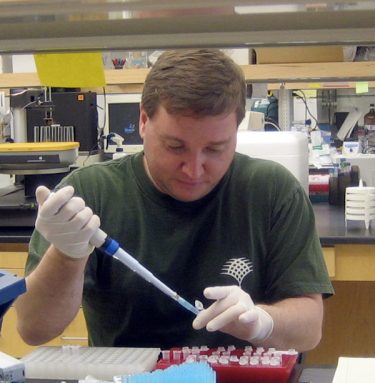
Jez studies the proteins that control the amount of certain chemicals that plants make. In finical, He studies the shape of those proteins. It turns out that a protein's shape can sham whether a plant makes a lot of roughly protecting chemical, a bit, surgery none at entirely.
To view a protein's shape, Jez has to turn the reincarnate into a crystal. Helium then uses X-rays to probe the organisation of its atoms. This creates a picture of the protein's structure in three dimensions.
Better apprehension the shape of these proteins should offering clues to how they moderate chemicals.
"I try to understand nature's machinery and how IT makes proteins," Jez says. "We'rhenium still at the real early stages, but if we can compute that out, we might be able to control information technology." Both researchers are studying how to build useful proteins in the test tube. Others are trying to understand how to aid plants boost their yield of these proteins.
E.g., certain crops, such as sorghum and rice, of course produce chemicals to fight off invading species. To a farmer, those potential invaders are widow's weeds. Not all sorghum and rice plants can serve this, however.
Understanding how certain varieties of important crops protect themselves by staging chemical warfare against invading species can help flora breeders. They can use what they watch to create new crop plants that Thomas More effectively fight widow's weeds with little help from Mary Jane-killing chemical sprays.
Of course, plants also make chemicals for gentler purposes, such as attracting pollinators.
Pollinators, such as bees, carry powdery grains from one flower to other. When pollinators land on a flower, they drop some of those grains, named pollen. Pollen fertilizes the imbe so that IT can regurgitate.
The Citrus limon provides a model of a plant that makes a chemic to pull in pollinators. The limonene it makes has a lemony scent that pollinators — and populate — like.
Limonene represents a gentler form of chemical warfare, says Jez. That's because the lemon tree is not stressful to kill nearby plants. The tree or else is trying to guarantee that it attracts more its fair share of pollinators.
"It's about outcompeting the others," he explains.
The power of plants to make chemicals fascinates Jez. However, what rattling thrills him is successfully turning some institut protein into a crystal. When he succeeds (and often it ISN't sluttish), he can get over the first person to ever witness the protein's structure — its skeleton.
Many more discoveries await Jez, as well as Payette, Wolverton and others. And they continue probing because they have a deep curiosity about how plants alter their environment. What they pick up might finally help people speed those changes — or slow up them down.
Power Words
allelopathy A plant's production of chemicals that impair the growth and survival of other plant species.
global climate change Long-run, significant change in the mood of Earth. IT can happen by nature or in reception to human activities, including the impassioned of fossil fuels and clarification of forests.
ecologist A life scientist who studies the relationships among living things and their environment.
transpiration A process in which plants carry moisture from their roots to their leaves, where it is then thoughtful to the atmosphere as vapor.
microbe A microscopic being.
tundra A large, treeless part in the far northern hemisphere where the undersoil is permanently frozen.
Word Find
(click here to enlarge stick for printing)

This is one in a serial publication on careers in science, technology, engineering and mathematics made practical by support from the Northrop Grumman Understructure.
0 Response to "Cool Jobs: Green Science"
Postar um comentário